
Probiotic and Fermented Skincare: Manufacturing Realities
Probiotic skincare is one of the fastest growing categories and one of the most technically confused. A significant share of products marketed under the term cannot legally contain what the word implies, because a preserved cosmetic product is by definition hostile to live microorganisms. Understanding what the ingredients actually are clears up both the formulation problems and the claim limits.
Three Different Things Called Probiotic
- Live probiotics. Viable bacteria. These cannot survive in a conventionally preserved water containing product, and a cosmetic containing them would fail microbiological release testing. In practice, live cultures appear only in a small number of anhydrous or freshly prepared formats, and even then the viability over the shelf life is difficult to demonstrate.
- Lysates and inactivated cultures. Bacteria that have been broken down or killed, retaining the cell wall fragments and metabolites. These are stable, safe in a preserved formula and are what most products actually contain. The correct description is inactivated or non viable.
- Postbiotics and ferments. The metabolites produced by fermentation, such as organic acids, peptides and polysaccharides, or the fermented substrate itself. These are chemically stable and behave like any other active.
Reading the ingredient list tells you which you have. A lactobacillus ferment or a lysate is the second or third category. A product claiming live cultures and listing a conventional preservative is describing something that cannot exist.
Why Fermented Ingredients Are Hard to Formula With
Fermented raw materials are not a single defined chemical. A fermentation broth contains a variable mixture of organic acids, peptides, residual sugars, amino acids and water, and the composition depends on the strain, the substrate and the process conditions. Three consequences follow in the lab:
- Batch variation. Different production lots can differ noticeably in colour, odour, pH and acid content even within the supplier's specification. A formula developed on one lot may behave differently on the next. Ask for the specification range, not a single value, and build tolerance around it.
- Preservation interference. Organic acids produced during fermentation are themselves antimicrobial, which can help or hinder. They can lower the pH of the finished formula, sometimes outside the range the preservative system needs, and they can interfere with the challenge test result by suppressing the inoculum in a way that does not reflect the finished product's real performance.
- Colour and odour. A fermentation broth is generally tan to brown and carries a characteristic smell. A white cream containing 3 per cent of a ferment will not be white. Brands frequently specify a clarity or colour target that the raw material makes impossible, and the problem is best resolved by choosing the format and the colour expectation before formulation.
The Preservation Problem Is the Central One
This is where most probiotic projects hit trouble. A formula containing a ferment or a lysate has a higher nutrient content than a plain aqueous formula, which makes it more attractive to microbes. The fermentation derived organic acids can also shift the pH. The result is that a preservative system that comfortably passes in a standard formula can fail in the fermented version.
Three practical routes help:
- Low water activity formats. An anhydrous balm or an oil based product sidesteps the issue, at the cost of not delivering the water soluble ferment in a conventional way.
- Acid balanced preservation. Where the ferment lowers the pH into the acid range, a sorbate and benzoate system can be effective. This only works if the pH is genuinely in range and stable.
- Blended preservative with a multifunctional partner. A conventional preservative supported by a multifunctional ingredient such as a glycol, which contributes to preservation while also acting as a humectant.
Whatever the choice, the challenge test must be run on the finished formula containing the full level of fermented material. A result obtained on a base without the ferment tells you nothing.
Microbiome Claims: What Is Supportable
The word microbiome is used far beyond what the evidence currently supports. A topical product applied for eight weeks cannot be shown to establish a beneficial microbial community in a way that a regulator would accept as a substantiated claim, and asserting that it does is the kind of claim that invites challenge.
What is defensible is narrower and still commercially useful. Supporting the skin's natural balance is a statement about the product's intent rather than a measured outcome and should be used cautiously. Stronger is a formulation based argument paired with measurable data on the skin: hydration, trans-epidermal water loss, or irritation scores in a use test on sensitive skin. Those are measurements the product can genuinely deliver.
Claims about treating acne, eczema or any skin condition move the product out of cosmetics entirely. In this category specifically that boundary is heavily tested by competitors and by regulators, so the wording on the pack deserves more attention than usual.
Formulating for a Credible Product
Three decisions make the difference between a product that works and one that is a story on a carton:
- Choose the ingredient type deliberately. A lysate at a use level that the supplier's data supports will do more than a ferment at a decorative 0.5 per cent. Ask what use level the evidence relates to.
- Support it with ingredients that have measurable effect. Prebiotic sugars, niacinamide, panthenol and barrier lipids all contribute to the same skin comfort objective with published support and no formulation risk.
- Test the finished formula. Stability, challenge testing and a use test on the target audience. In a category where ingredient variation between lots is significant, testing on the actual production formula is not optional.
Fermented and Microbiome Formulas Developed With Testing
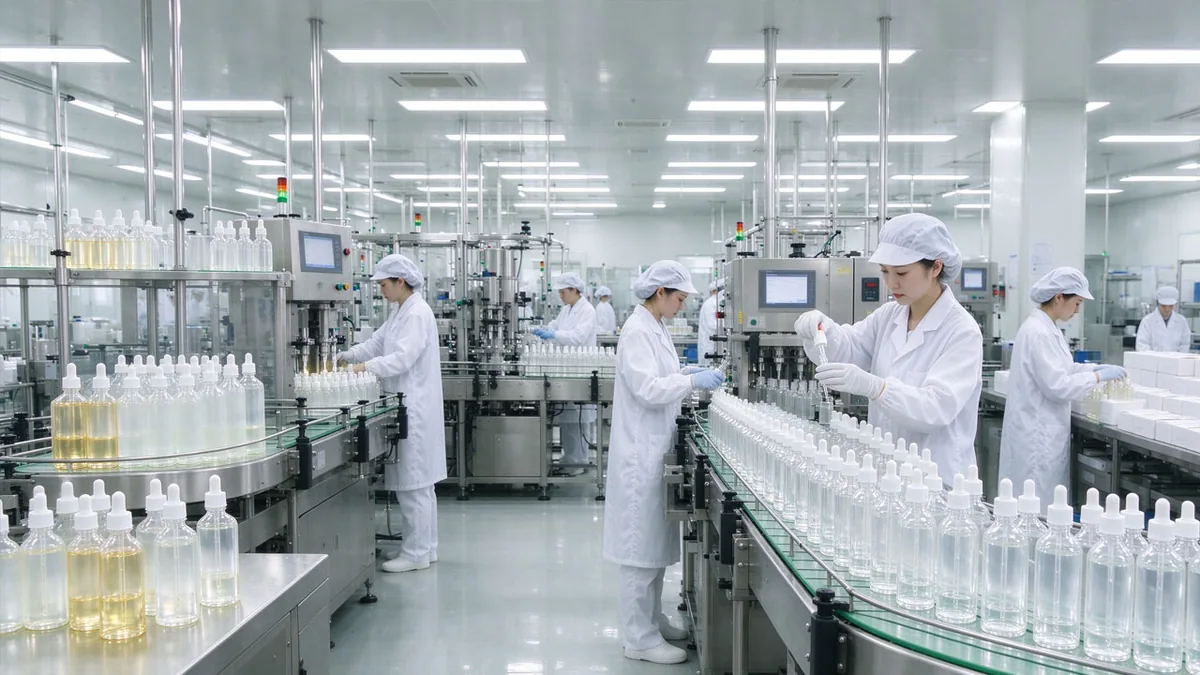
OEM COSMETICS ODM develops fermented, lysate and postbiotic skincare on ISO 22716 and GMP certified lines, with batch tolerance assessment on the raw materials, challenge testing on the finished formula and hydration and comfort measurements to support the claims. Send us your active list and the claim you want to make and we will confirm what can be substantiated.
Talk to our team: WhatsApp +86 18709713948 · Email adon@oemcosmeticsodm.com · Website www.oemcosmeticsodm.com