
The first pass of any sourcing project looks like a keyword exercise: low MOQ cosmetics manufacturer, cosmetics factory store, and a dozen variants. The second pass is where the work sits — separating manufacturers who can evidence their capability from those who are describing an aspiration.
Rather than restate the category's appeal, this piece works through how to build a signature product in modern beauty production as a set of decisions with dates attached — which choices constrain the ones that follow, and which of them are expensive to reverse once production has started.
How to Build a Signature Product: How to Compare Options
Comparing options in building a signature product is only meaningful if the comparison is on evidence. Certificates that are current and scoped to the producing site, an in-process QC record, and a sampling file that can be repeated say more than any capability page.
A buyer evaluating a partner for building a signature product should be able to answer four questions from documents rather than conversation: what certifications are current, what the in-process QC record looks like, how a reorder is kept consistent with the first run, and who is responsible for the regulatory file in each destination market. A supplier who can answer all four without a follow-up is a supplier worth shortlisting.
How to Build a Signature Product: Where the Cost Sits
A budget for building a signature product should carry a contingency for the revision you have not planned for. Building that in at the outset is cheaper than discovering it mid-launch.
Commercial terms are where a launch budget is won or lost. The standard structure is 30% deposit, 70% before shipment. Sampling runs at roughly about 7 days per round, and bulk production for an approved ready formula takes 25–35 days. Build at least one sampling revision into your launch calendar — the first round confirms direction, the second confirms fit.
Where the Operational Risk Sits
The commercial case for how to build a signature product in modern beauty production is easier to make than the operational one. A brief that reads well can still fail on the line, and the failures are predictable once you know which decisions drive them. The variables that cause trouble are rarely exotic: they are pH, process temperature, particle size, preservative efficacy and how a component behaves after a few weeks of real storage.
A partner who has produced this category before can usually name those risks in the first conversation, which shortens development because the obvious mistakes are avoided rather than discovered. The difference between a smooth launch and a delayed one is often not the formula itself but whether the risk list was written before the first sample instead of after it. The point is not that every brand needs a bespoke solution — it is that the decisions made at the formulation and packaging stage determine what is possible later, and reversing them after a launch is expensive.
- Define the destination market before the formula, not after
- Confirm component minimums before committing to a fill quantity
- Test the finished product at the climate it will actually be used in
- Document every raw material decision so a reorder matches the first run
Sequencing the Development Properly
Development on this kind of brief usually moves in two rounds. The first confirms direction: texture, sensory profile and the general active level. The second confirms fit, which is where the formula gets adjusted against real constraints. Most brands enter this stage with a fixed launch date and no slack, which is what turns a minor adjustment into a missed window. Sequencing the sampling rounds against the packaging lead time, rather than against the formula alone, is what keeps the two in step. Budgeting for both rounds at the outset avoids the more common problem, which is discovering after the first sample that the timeline no longer works.
Quality and Consistency Across Reorders
Quality in cosmetic manufacturing is a chain rather than a checkpoint. Raw material qualification, in-process control during production, finished goods inspection and stability testing across the shelf life all have to hold, because a failure at any one of them shows up in the consumer's hands as a single problem.
A facility that runs 18 documented in-process checkpoints and a three-point inspection process is set up to catch problems while they are still correctable. That is worth more to a brand than any individual certification, because it is what keeps the second production run identical to the first.
What Actually Separates One Supplier From Another
The words brand and odm appear on almost every supplier page, which is precisely why they carry so little information. What carries information is a create own capability you can inspect, a odm cosmetic programme with named references, and a Custom sunscreen manufacturer usa record that survives a request for detail.
The distinction between a label cosmetics supplier and a skincare manufacturer one is rarely visible on a homepage. It is visible in how a custom cosmetic brand manufacturer answers a documentation request, how a skincare factory handles a reorder, what a skincare ODM manufacturer does when a raw material changes, and what a skincare production company will put in writing. Someone who found the shortlist via skincare production company is entitled to ask all four.
None of this is exotic. It is the ordinary difference between a top supplier and one that is simply own on price. The evidence that matters — current certificates, in-process QC records, a sampling file that can be repeated — is available in the first two weeks of a working relationship, or it is not available at all.
MOQ, Lead Time and What to Budget
| Model | Minimum order | What it suits |
|---|---|---|
| Private label (ready formula) | 1,000 units | Fast entry, proven formula, lowest risk |
| Custom formula (ODM) | 3,000 units | Differentiated claims, proprietary feel |
| Custom packaging | 5,000–10,000 units | Bespoke componentry and decoration |
| Stage | Typical duration |
|---|---|
| Brief and formula direction | 1–3 days |
| Sample development and revision | about 7 days per round |
| Sample approval and MOQ confirmation | 1–2 days |
| Bulk production (ODM ready formula) | 25–35 days |
| Quality inspection and documentation | 2–3 days |
| Shipping and export paperwork | by arrangement |
Commercial terms are where a launch budget is won or lost. The standard structure is 30% deposit, 70% before shipment. Sampling runs at roughly about 7 days per round, and bulk production for an approved ready formula takes 25–35 days. Build at least one sampling revision into your launch calendar — the first round confirms direction, the second confirms fit.
What to Look For in a Production Partner
A production partner's real capability shows up in three places: the certificate wall, the workshop layout and the QC record. Guangzhou Laiyue Biological Group Co., Ltd. operates a 7,037 m² facility in Huadu District, Guangzhou, China with separate lines for cream and emulsion, aqueous formats, powders, hot-pour colour cosmetics and sheet masks. That separation matters because it prevents the cross-contamination and changeover delays that come from running every format on one line.
Certification is not a marketing badge — it is the document set your importer will ask for. The essentials are ISO 22716 (Cosmetics GMP), GMPC (audited by Intertek), HALAL, with market-specific support for FDA facility registration support, EU CPNP notification support, ASEAN notification support. A credible manufacturer supplies a Certificate of Analysis per batch and can produce the regulatory file for your destination market without you chasing it.
Quality control is a process, not a promise. Look for 18 documented in-process checkpoints and a three-point inspection covering incoming raw materials, in-process bulk and finished goods. An in-house laboratory is what allows those checks to happen without waiting on an outside service, which is usually the difference between a stable batch and a delayed one.
Building a Range That Holds Together
One practical advantage of working with a single partner across a range is consistency. The same emulsion standards, preservative philosophy and inspection process apply to every SKU, so a line does not feel assembled from unrelated suppliers. For a distributor building a portfolio, that consistency is a commercial asset — it makes the range defensible on quality rather than only on price.
Most successful launches in this space start narrow and expand. A single hero product that performs as promised builds the review base, the repeat purchase and the retail confidence that a wider range then inherits. Rushing to a full line before the first product has proven itself is one of the more common ways a brand spreads its budget too thin to matter anywhere.
When the range does expand, consistency is what holds it together. The same how to build a signature product in modern beauty production standards and the same process should apply across every SKU, so a customer who trusts one product can reasonably trust the next.
Regulatory and Packaging Decisions
Regulatory readiness varies by destination and is the most common source of last-minute delay. The efficient approach is to establish the destination markets first, confirm which actives and claims are permitted in each, and only then finalise the formula. Doing this in reverse — formulating first and checking compliance afterwards — is how launches end up reformulating at the worst possible moment.
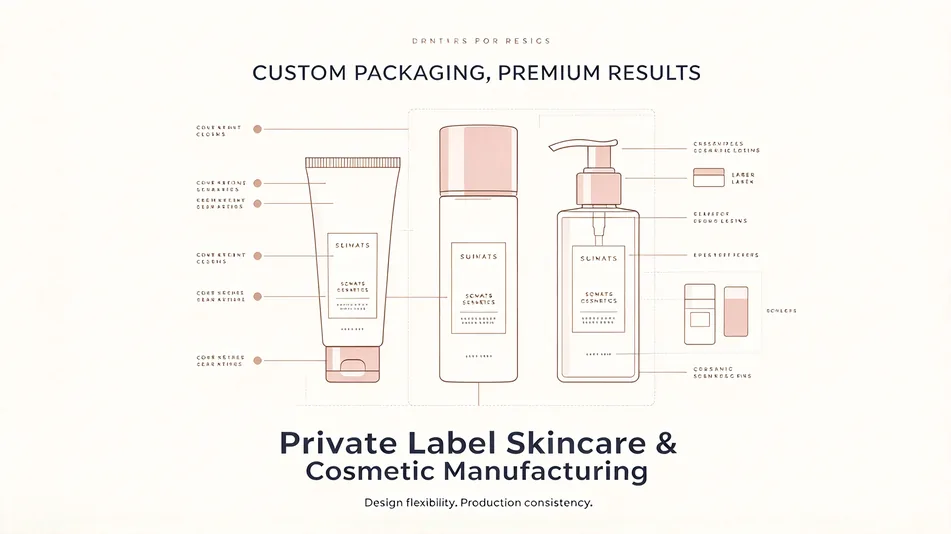
Packaging is where the launch minimum is usually set, not the fill quantity. A stock component with standard decoration keeps the minimum aligned with the fill order, while a bespoke mould or a custom colour carries its own minimum that can be several times higher. Confirming the component minimum before the formula is approved is what prevents an unwelcome surprise at the deposit stage.
Mistakes Worth Avoiding
The recurring mistakes in how to build a signature product in modern beauty production are worth naming because they are all avoidable. Formulating before the destination market is fixed. Committing to a fill quantity before the component minimum is confirmed. Approving a sample without evaluating it in the climate where it will be sold. Treating the first production run as a one-off rather than as the template for every reorder that follows.
- Fixed market first, then formula, then packaging
- Component minimum confirmed before deposit
- Sample evaluated in the target climate and on target skin
- First run documented as the standard for all future runs
What a Well-Prepared Launch Looks Like
What good looks like is unglamorous. A partner who answers questions with documents, who names the risks in how to build a signature product in modern beauty production before you ask, who gives a sampling timeline they have met before, and whose second production run matches the first. None of that appears on a supplier's homepage, but all of it is visible in the first two weeks of a working relationship.
How to Compare Partners on Evidence
A buyer evaluating a partner for how to build a signature product in modern beauty production should be able to answer four questions from documents rather than conversation: what certifications are current, what the in-process QC record looks like, how a reorder is kept consistent with the first run, and who is responsible for the regulatory file in each destination market. A supplier who can answer all four without a follow-up is a supplier worth shortlisting.
A partner's track record is the most reliable predictor available. A manufacturer that has served 233+ clients across 60+ countries and 5 continents has already encountered most of the problems a new brand is likely to face, from stability failures to regulatory rejections to packaging that did not survive transit.
Cost in this category is rarely driven by the formula alone. Packaging, filling time, regulatory documentation and the number of sampling rounds all contribute, and the cheapest quoted price is often the one that omits one of them. Comparing two suppliers on unit price alone for how to build a signature product in modern beauty production usually produces the wrong decision, because the cost of a delayed launch or a failed batch is not visible on the invoice.
Sensory performance is the variable that decides whether a product is repurchased. Texture, spread, absorbency and after-feel are all formulation outcomes, and they cannot be judged from a specification sheet. A product in this category has to be evaluated on skin, in the climate where it will be sold, before the formula is locked.
One more point worth stressing about how to build a signature product in modern beauty production: the difference between a product that sells for one season and one that becomes a repeat purchase is usually consistency. Consumers who buy a second unit expect it to behave exactly like the first, and any drift in texture, scent or performance reads as a quality problem regardless of the cause.
That is why the process controls matter more than the launch marketing. A brand that gets the formulation and the documentation right, and then focuses its energy on distribution and retention, will outperform one that treats manufacturing as a one-time transaction to be repeated with the lowest bidder each cycle.
Four questions shorten the evaluation of any partner for how to build a signature product in modern beauty production. Ask which certifications are current and whether the audit reports are available. Ask what the in-process QC record covers. Ask how a reorder is held consistent with the first production run. And ask who owns the regulatory file in each destination market. A supplier who answers all four directly, with documents rather than assurances, has cleared the only hurdle that actually matters.
If you are comparing candidates and want to move quickly, arrive at the first conversation with three inputs: your destination market, your target texture or sensory profile, and your intended volume. With those three, a manufacturing partner can usually recommend a starting formula direction and a realistic timeline in a single reply.
The practical conclusion for how to build a signature product in modern beauty production is that the category rewards preparation far more than it rewards speed. A brand that resolves its market, formula route, component minimum and sampling schedule before approaching suppliers will move faster than one that starts the conversation with an open brief, because it will need fewer iterations to reach a product it can actually sell.
We invite you to explore our capabilities and discuss your next product line. You can reach us directly via WhatsApp +86 18709713948 Email adon@oemcosmeticsodm.com · Website www.oemcosmeticsodm.com.