
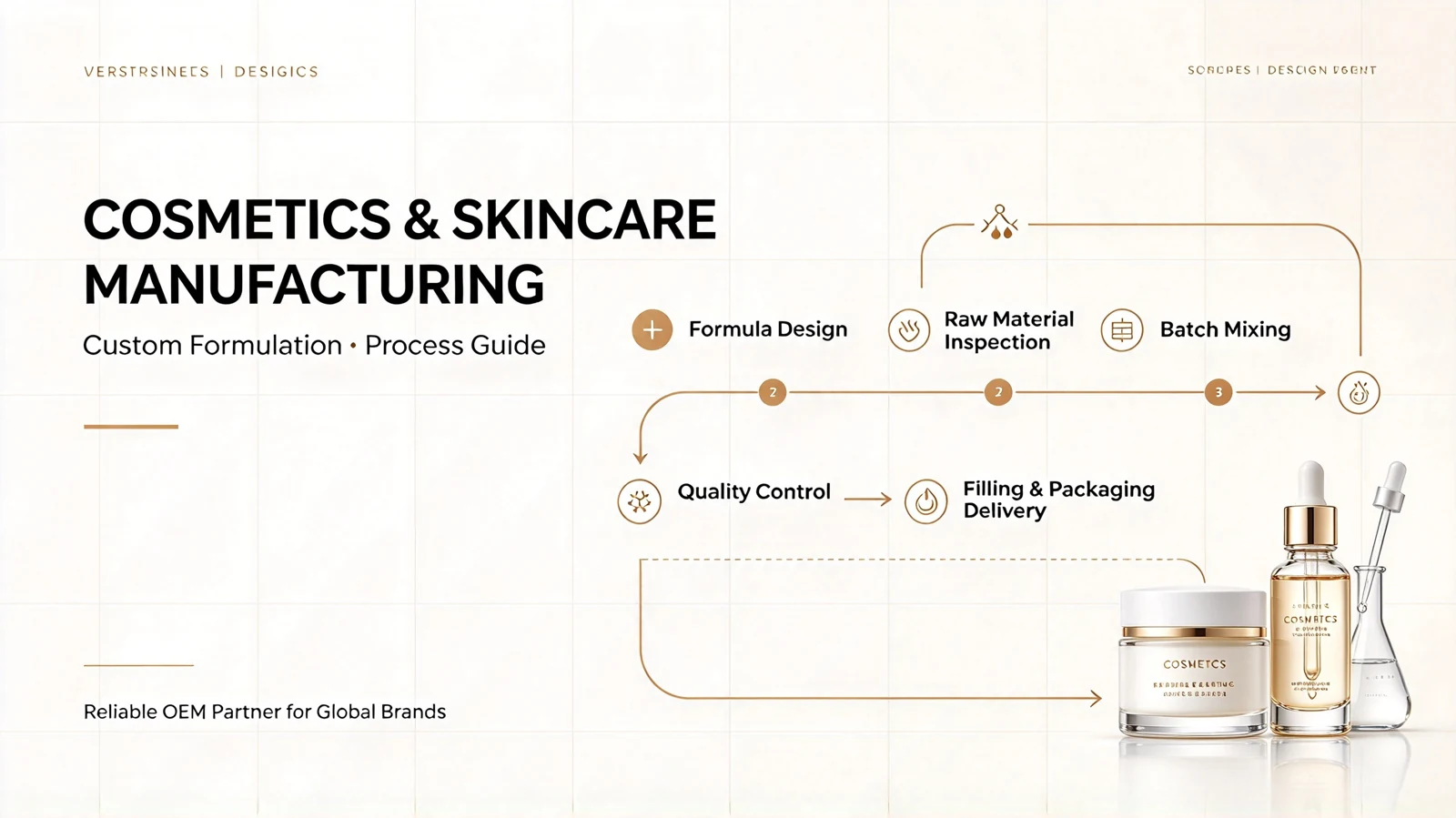
Eye Cream packaging can leak, dispense poorly or change during storage even when the formula sample performs well. Approving the filled pack matters because formula and component behaviour must work together throughout handling and use. This guide covers small-dose pumps and applicator tips, the related quality checks and the records to request for a private label eye cream project.
Small-Dose Pumps and Applicator Tips
Measure delivered mass over repeated actuations. Inspect metal or plastic applicator tips for compatibility and cleaning practicality. Compare dose with the intended directions rather than choosing a component only for its premium appearance.
Use the actual bottle, tube, compact or mechanism proposed for production, including the closure and product-contact parts. Assign a sample code to the assembled pack. If one part changes, review which earlier checks remain representative before carrying the approval forward.
Eye Cream packaging options compared
| Packaging route | Functional trade-off | Related acceptance area |
|---|---|---|
| Small-dose pump | Repeatable output with priming and actuator checks | Small-Dose Pumps and Applicator Tips |
| Applicator-tip tube | Local spreading with tip compatibility and user-dose checks | Small-Dose Consistency and Area-Specific Evaluation |
A component catalogue or dimensional drawing is a starting point. The final decision needs a filled sample because geometry, formula behaviour and contact materials influence each other. A visual match to a benchmark does not establish equivalent function.
Small-Dose Consistency and Area-Specific Evaluation
Evaluate the formula according to its intended application area with suitable safety support. Track texture, pH where relevant and compatibility with the final dispenser. Do not infer an eye-area test result from a general face-cream assessment.
Write the method, conditioning, observation point and acceptance criteria beside each result. Identify who can release the batch and how an out-of-specification result is handled. Physical checks, microbiological assessment where applicable and any performance evidence answer different questions.
Eye Cream packaging approval checklist
- Freeze the formula reference and the component bill of materials before evaluating small-dose pumps and applicator tips.
- Check newly filled packs and conditioned packs; include the transport orientations and repeated-use handling relevant to the design.
- Record small-dose consistency and area-specific evaluation using a repeatable method and retain photographs or reference samples.
- Confirm decoration, lot-code legibility, carton protection and the relevant fill or net-content checks.
- Link the accepted pack to the purchase order and require review of changes to product-contact materials.
Quality records, certification scope and delivery
A manufacturing certificate and a product test report serve different purposes. Ask for the certificate holder, site, scope, issuer and validity when certification is relevant; request the actual product and batch records separately. Do not treat a certificate image as proof that a particular formula-and-pack combination passed compatibility testing.
Confirm sample and packaging costs, minimum quantities, production timing and release documents before shipment. Review relevant product formats and OEM/ODM development options for the project brief. The companion guides cover Eye Cream Formulation: Spread Control and Residual Film and Private Label Eye Cream: Applicator Costs and Evidence Planning.
Eye Cream OEM/ODM FAQ
What is the private label eye cream MOQ?
Request both finished-product and packaging minimums for the agreed specification. Formula batch size, shades or fragrance variants, fill weight and component decoration can create separate commitments. An indicative minimum is not a confirmed quotation.
What should custom eye cream samples include?
Request filled production-intent components, including the actual closure and decoration. An empty component cannot demonstrate sealing, dosing or contact compatibility.
How should I compare eye cream manufacturers?
Compare the proposed development scope, relevant process capability, sample quality, documentation, component sourcing and written change controls. Ask for evidence relevant to your project instead of ranking suppliers by marketing claims.
Can the eye cream formula and packaging be customised?
Discuss the requested changes with the manufacturer before committing. Formula, shade or fragrance, fill size and decoration may be adjustable, but feasibility and the need for new tests depend on the exact change. Record formula ownership and exclusivity separately in the agreement.
What affects eye cream production lead time?
Formula and component approvals, material availability, testing, production scheduling and shipment preparation affect the schedule. Ask for milestone dates and their dependencies. Development, bulk production and transit are separate stages.
Which eye cream checks matter most for this project?
Measure delivered mass over repeated actuations. Evaluate the formula according to its intended application area with suitable safety support.
What should be confirmed before eye cream delivery?
Confirm batch release, quantities, lot identification, packing list, carton condition and the documents agreed for the destination market. State shipping terms, transport responsibility and how defects or shortages will be handled. A dispatch date and an arrival date are different commitments.
Conclusion
Choose eye cream packaging through filled-pack evidence and documented acceptance criteria. Keep the formula, component specification and release records linked so the product delivered matches the combination that was evaluated.
Further technical reading: FDA: cosmetic shelf-life considerations. Supplier guidance and regulatory references should be checked for the exact ingredient, intended use and target market.
Our OEM/ODM project discussions cover formulation development, sample refinement, packaging coordination, manufacturing and quality-control planning. Send your target market, product type, quantity per SKU and preferred pack so our team can confirm feasibility, MOQ and the next sampling steps.
We invite you to explore our capabilities and discuss your next product line.
You can reach us directly via WhatsApp +86 18709713948
Email: adon@oemcosmeticsodm.com
Website: oemcosmeticsodm.com