
EU Cosmetic Regulation: The Product Information File Explained
To place a cosmetic product on the European market you need a Product Information File, a Responsible Person established in the Union, and a notification on the CPNP portal before the product goes on sale. Brands routinely prepare the notification and leave the PIF until a buyer or an authority asks for it, which is the wrong order. The PIF is the evidence base for everything the notification asserts.
What the File Has to Contain
The required contents are specific. A complete file includes:
- A description of the product sufficient to identify it, including the name, the intended use, the product category and a photograph where helpful.
- The qualitative and quantitative composition. Every ingredient with its exact percentage, including ingredients present in trace amounts and any ingredient that is a nanomaterial.
- The Cosmetic Product Safety Report. Two parts: a safety assessment of the ingredients and the formula signed by a qualified safety assessor, and a separate section with the toxicological data, the calculation of exposure, and the assessor's conclusion on the product's safety.
- Manufacturing method and a GMP statement. A description of the process and confirmation that manufacture complies with the applicable good manufacturing practice standard, which in practice means ISO 22716.
- Evidence of the effect claimed. Where the product makes a claim, the data supporting it. This is the part brands most often underestimate, because a claim in marketing copy becomes a document obligation.
- Animal testing data. A statement on whether any testing on animals was carried out in relation to the development or safety of the product.
The Responsible Person Is Not a Formality
The Responsible Person is the legal entity that answers for the product in the Union. It must be established in the EU, and it is the party an authority will contact. It can be the brand itself if it has an EU establishment, an importer, or a third party service acting on the brand's behalf under a written mandate.
Two practical points cause problems. First, the name and address of the Responsible Person must appear on the label, so the packaging decision depends on who that party is. Second, the mandate has to be in writing and has to cover access to the PIF, since the Responsible Person is the party obliged to supply it to the competent authority on request. Brands that appoint a proxy without a mandate covering document access end up unable to answer an enquiry on their own behalf.
Language and Location of the File
The file has to be kept available at a single address within the Union, which the notification identifies. It does not have to be in the local language of every market, but it must be in a language the authority requesting it can understand, and in practice that means English or the language of the member state where the address is located.
Retention is ten years from the date the last batch of the product was placed on the market. Ten years is longer than most brands expect and it means the file has to survive staff changes, supplier changes and platform migrations. Keeping it in a controlled document system rather than in an email folder is worth doing deliberately.
How the File Is Assembled in Practice
The efficient sequence runs the document work alongside the development rather than after it:
- At brief. Confirm the product category, the intended use and the destination markets, because these set the applicable restrictions.
- At formula freeze. Obtain the qualitative and quantitative composition in exactly the format the assessor needs, including the purity and the nanoparticle status of any relevant ingredient.
- During stability. Collect the pack compatibility and microbiological results that feed the safety assessment.
- Before artwork sign-off. Confirm the Responsible Person, the address on the pack, the ingredient list order and the allergen declaration.
- Before first shipment. Notify on CPNP, obtain the notification number and store the confirmation in the file.
The single biggest cause of delay we see is the composition disclosure. A manufacturer that only provides an ingredient list without percentages cannot support a PIF, and a brand that discovers this after the first batch has a problem. Agree the disclosure level at the quotation stage, with a confidentiality agreement if needed.
What Changes Between the EU and Other Markets
The PIF is an EU construct. The United Kingdom has a parallel regime with its own notification requirement and its own responsible person concept, and a product notified in the EU is not automatically notified there. The United States historically had no equivalent pre-market file for cosmetics, and the framework introduced under recent reform adds facility registration and product listing obligations rather than a single dossier.
For a brand selling in several markets, the practical approach is one master technical dossier containing composition, safety assessment, stability, microbiology, packaging compatibility and claim substantiation, and then market-specific extracts. The master dossier is a manufacturer deliverable; the extracts are the brand's responsibility in each market.
Claims Are Where Files Fail
Because the claim evidence obligation is part of the file, marketing copy written without reference to the file creates a compliance exposure. A product described as clinically tested needs the clinical test. A product described as dermatologically tested needs the dermatological test and a statement of the number of subjects and the protocol.
The workable discipline is to write the claims list before the artwork, mark each claim as either substantiated by existing data or requiring a study, and then decide which studies to commission. Doing this in the wrong order means either cutting claims after the labels are printed or shipping claims that cannot be defended.
EU Documentation Prepared With the Formula
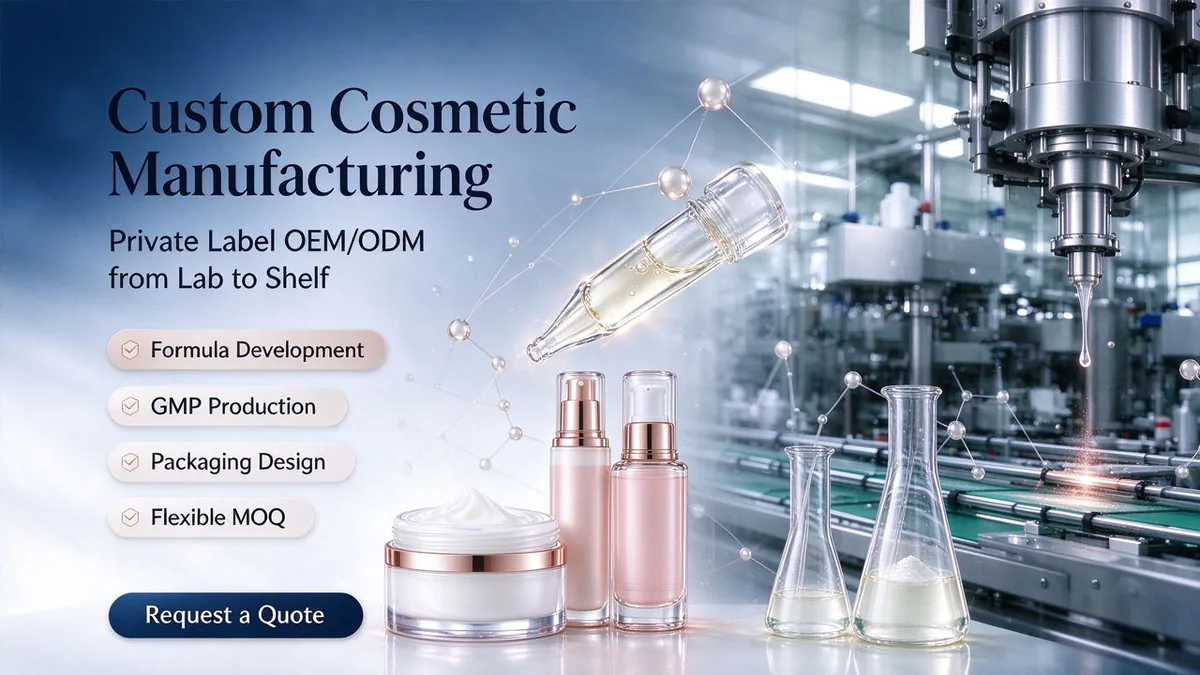
OEM COSMETICS ODM supplies the composition disclosure, GMP statement, stability and microbiological data and packaging compatibility evidence needed to build a Product Information File, on ISO 22716 and GMP certified lines. Send us your target markets at the brief stage and we will confirm the documentation scope before sampling begins.
Talk to our team: WhatsApp +86 18709713948 · Email adon@oemcosmeticsodm.com · Website www.oemcosmeticsodm.com