
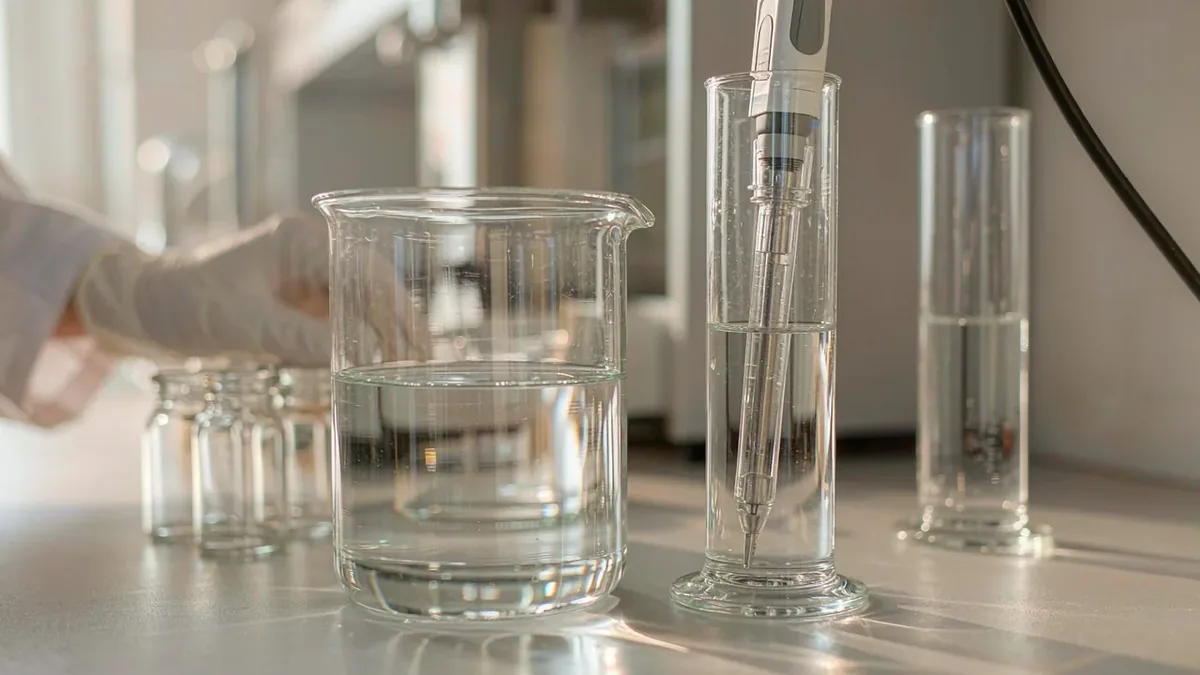
Inside the Factory Laboratory: What Gets Tested In-House
Brands often assume that the certificate of analysis they receive covers everything, and that anything not on it must be commissioned separately. The reality sits between the two. A factory laboratory is built for speed and coverage rather than depth, and understanding what belongs there prevents both gaps and duplicated spending.
The In-House Job
The laboratory's purpose is to answer questions quickly enough to keep a production schedule intact. It checks incoming raw materials, monitors the batch during manufacture, tests the finished product against specification and releases the batch. Every one of those is a routine, high-frequency measurement with a short turnaround. Anything that requires weeks, specialised facilities or ethical approval belongs elsewhere.
Raw Material Identification
Incoming materials are verified against the specification before they enter production. The depth of that verification depends on the risk. High-value and easily substituted materials, such as certain actives, fragrance compounds and specific oils, typically receive an identity check rather than a full panel. Common techniques include infrared spectroscopy compared against a reference spectrum, refractive index, specific gravity, melting point, appearance and odour. Packaging components are checked against the approved sample and measured against drawings, with functional checks such as pump output or cap torque where applicable.
The supplier's certificate of analysis is a document, not a substitute for verification. A laboratory that relies entirely on certificates has no defence against a mislabelled drum.
In-Process Testing
In-process checks catch a drifting batch before it becomes a rejected one. Typical checkpoints and measurements include the following.
- pH at defined stages, since pH affects emulsification, thickening and preservative performance, and a shift of a few tenths can indicate an ingredient weighed incorrectly.
- Viscosity measured under defined conditions of spindle, speed and temperature. Viscosity is meaningless without those parameters being stated.
- Appearance and homogeneity, including colour against a standard, the presence of grit or undispersed material, and the absence of visible separation.
- Temperature at each addition, recorded rather than observed.
- Weight and completeness of each phase, confirming that every ingredient that should have been charged was charged.
Finished Product Testing
Before release, the batch is tested against the finished product specification. Routine tests typically cover appearance, odour, pH, viscosity, specific gravity, fill weight and net content, plus a microbiological screen on aqueous products. Additional parameters are added where the formula demands them: active content by a suitable method, preservative level, colour measurement, or a functional check such as foaming or spray rate.
Notably, the tests that a regulator or a retailer will ask about most often, such as preservative efficacy and stability, are not routine batch tests. They are studies, performed once per formula and repeated when something changes.
The Instruments That Do the Work
A competent cosmetic laboratory is unglamorous in its equipment. A calibrated pH meter with temperature compensation. A rotational viscometer. A balance precise enough for small additions and a second for larger quantities. A refractometer and a hydrometer. A centrifuge, used both for emulsion stability screening and for separating phases in analysis. An oven and an incubator. A microscope for particle and microbial observation. Water activity measurement for anhydrous and low-water formulas. A colour measurement device for shade-critical products. And increasingly, an infrared spectrometer, which has become affordable enough for mid-sized plants and dramatically speeds up raw material identification.
Calibration and maintenance records for each instrument are part of the quality system. An out-of-calibration instrument invalidates the results produced during the affected period, and the plant should be able to show when that risk window was and what was done about it.
Microbiology and Water
Microbiological work in-house is usually limited to routine enumeration and specified absence tests on finished product and on process water. Maintaining an environmental monitoring programme, with swabs from filling equipment and air sampling in critical areas, adds useful early warning. Identification of an unexpected organism, and any investigation of a positive result, generally belongs with an external laboratory that has the reference library and the experience.
Water testing is a permanent in-house activity rather than a project. Conductivity, total organic carbon if instrumented, hardness after pre-treatment, and periodic microbial counts at defined sampling points make up the routine programme, and the trending is often more informative than any single result.
What the In-House Laboratory Cannot Do
Three categories sit outside a factory laboratory by design. Clinical and human studies, including patch testing and sun protection factor determination, require accredited clinical partners. Preservative efficacy testing requires a defined organism panel, controlled conditions and time. Stability studies require both time and disciplined storage, and although the factory usually holds the samples and performs the periodic checks, the formal report for a regulatory dossier is better produced by an accredited laboratory. Heavy metals and contaminant analysis generally requires instrumentation that only justifies its cost in a specialist facility.
Records and Traceability
Every result should be tied to a batch number, a date, an instrument and the person who performed the test. Raw data, not only the pass or fail conclusion, should be retained. This is what makes a batch record defensible months later, and it is a reasonable thing for a brand to request sight of during an audit. OEM COSMETICS ODM operates a documented in-house laboratory under ISO 22716 and GMP systems, with calibrated instruments, batch-linked raw data and trending on water and environmental monitoring, and provides the analytical results alongside the batch record for every order.
Talk to our team: WhatsApp +86 18709713948 · Email adon@oemcosmeticsodm.com · Website www.oemcosmeticsodm.com