
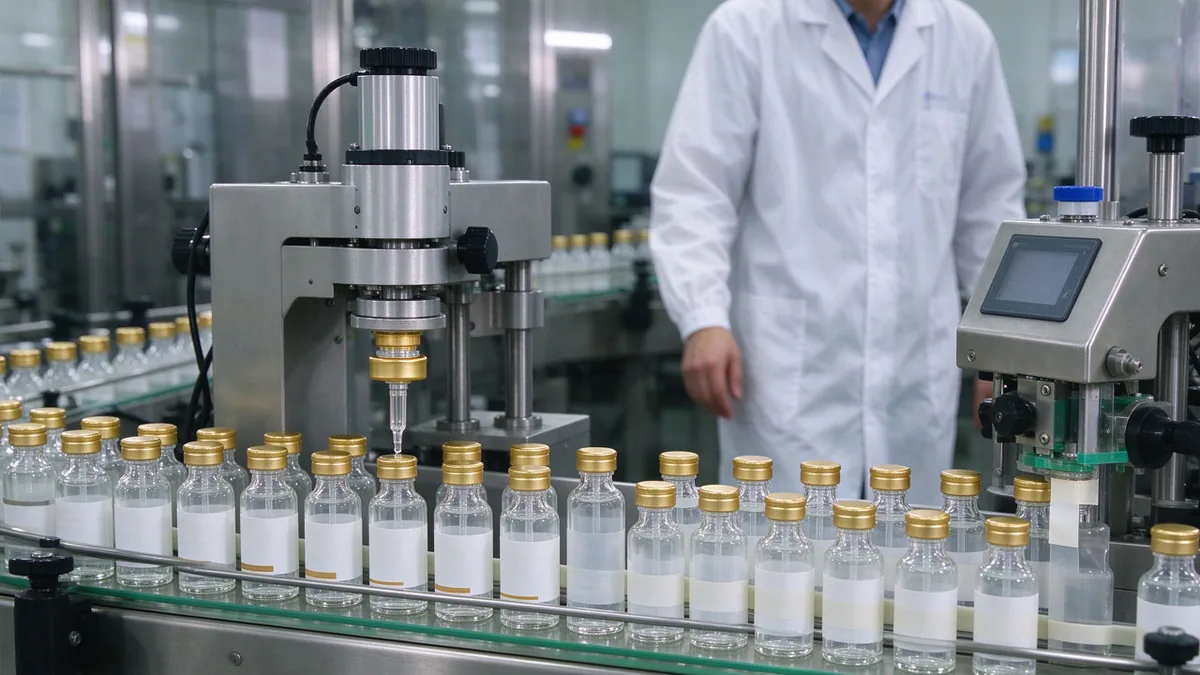
Deodorant and Antiperspirant Manufacture: Formats and Fill Weight
Deodorant is one of the few cosmetic categories where the hardware and the chemistry are equally important. A stick that will not glide, a roll-on that dispenses erratically or a spray that spits are all failures of the pack interacting with the formula rather than of the formula alone. Deciding the format early is what keeps a project on schedule.
Deodorant and Antiperspirant Are Different Products
The distinction is a regulatory one, not a marketing one. A deodorant controls odour, usually by managing the bacteria that produce it or by masking it. An antiperspirant reduces perspiration, and in the United States that makes it an over-the-counter drug with an active ingredient, a defined test protocol and a monograph to comply with.
This single fact decides several downstream questions. If your product contains an aluminium salt intended to reduce sweating, you are in antiperspirant territory and the claim, the testing and often the market access route all change. If it controls odour without reducing sweat, it is a cosmetic in most markets and the path is shorter.
Choosing the Format
- Stick. A solid wax and oil matrix, either anhydrous or an emulsion, dispensed by a twist or push-up mechanism. Anhydrous sticks are straightforward to manufacture because the product is poured molten into the barrel at 70 to 80 degrees Celsius and cooled in place. The critical variable is the melting point of the wax blend, which must sit above the highest likely storage temperature but below body temperature. Between 45 and 55 degrees Celsius is the usual target.
- Roll-on. A liquid, usually an emulsion or a clear hydro-alcoholic fluid, dispensed by a ball and housing. Fill accuracy is easy, the ball and housing interaction is the risk, and the ball material must be compatible with the formula to avoid swelling.
- Spray. Requires a propellant system and a suitable valve. The manufacturing requirement is different in kind: filling lines for aerosols need a propellant filling station and the facility needs the relevant safety classification. Many cosmetic factories do not run aerosols and will outsource that step.
- Cream. A thick emulsion in a jar or a squeeze tube. Easy to manufacture, harder to market because application by hand is less convenient than a roll-on.
Sticks and roll-ons account for the majority of private label projects because both can be filled on standard cosmetic equipment.
Fill Weight, Tolerances and the Empty Weight Problem
Deodorant packs have a significant empty weight relative to their contents, and this is where fill tolerance becomes commercially important. A 50 gram stick may have a container weighing 20 grams. If your fill check measures gross weight, an error of a few grams can pass unnoticed, and a systematic underfill across a production run is a real loss.
The standard approach is tare-based filling: the machine weighs the empty barrel, dispenses to the target net weight, then weighs again. That requires a container weight consistency that some low cost components cannot deliver, which is why specifying the pack with the manufacturer before approving the fill target is worthwhile.
Declared net weight also has to allow for product that remains in the pack after normal use. Regulations on nominal quantity look at what the average unit contains, not what the customer can extract, so a declared 50 grams must be 50 grams in the pack.
Formulation Notes by Format
Anhydrous sticks are built from a wax phase, an oil phase and the active or odour control ingredients. Stearyl alcohol, cetyl alcohol and various synthetic waxes form the structure; cyclomethicone and esters provide glide. A common failure is a stick that feels tacky because the oil phase is too polar relative to the wax.
Roll-ons are usually emulsions. Emulsion stability is the main risk, and the ball housing creates shear during use that can break a marginal emulsion. Clear hydro-alcoholic roll-ons avoid this but sting after shaving, which matters for a large share of the market.
For deodorants built around odour control rather than sweating, the standard actives are antimicrobial agents and acidifying systems, which work by making the environment less favourable to odour-causing bacteria. Zinc salts, sodium bicarbonate and various acidulants appear regularly. Each has a formulation consequence: bicarbonate is alkaline and destabilises many emulsions, and zinc salts can leave marks on dark clothing, which is a recurring consumer complaint.
Testing and Claims
For a cosmetic deodorant, the usual evidence is a sniff panel test. Trained assessors score odour intensity on treated and untreated axillae over a defined period, typically 24 hours with a standardised activity protocol. It is inexpensive and it is the standard the category uses.
For an antiperspirant, the United States requires a specified clinical protocol measuring sweat weight reduction. It is a substantial study and it should be budgeted before the project is approved, not after the formula is finished.
In every case, claims about stopping sweat, eliminating odour permanently or killing bacteria are either drug claims or absolute claims that will not survive review. Odour control, freshness and 24 hour confidence in a clinical sense are the safe forms of wording.
Deodorant Ranges Built Around the Pack
OEM COSMETICS ODM produces deodorant sticks, roll-ons and creams on ISO 22716 and GMP certified lines, with pack compatibility screening, fill tolerance validation and sniff panel testing arranged as part of the project. Send us the format and the claim you want to make and we will confirm what the product has to be.
Talk to our team: WhatsApp +86 18709713948 · Email adon@oemcosmeticsodm.com · Website www.oemcosmeticsodm.com