
Custom Mould Tooling for Cosmetics: Costs and Lead Times
Choosing between a stock pack and a custom one is the most consequential packaging decision a brand makes, and it is usually made on the basis of appearance when it should be made on the basis of fixed cost, minimum order quantity and reversibility. A custom mould is a five or six figure investment in some cases, and it locks in a minimum run quantity for as long as you use it.
What Tooling Actually Costs
The cost of a mould is driven by four factors, and understanding them explains why two quotes for superficially similar packs can differ threefold.
- Number of cavities. A single cavity tool makes one component per cycle. A multi cavity tool makes several, which lowers the cost per part but multiplies the tool cost. For a cosmetic pack at modest volume, a single or two cavity tool is normal; for a closure that will be produced in millions, a higher cavity count pays back.
- Part complexity. A simple jar body with a straight wall and no undercuts is straightforward. A pump with a moving mechanism, a twist-lock closure or a part with an undercut that requires a collapsible core or a side action adds significantly to the tool cost and to the risk of production issues.
- Tool material and expected life. A tool built for a few hundred thousand parts uses a different steel and a different heat treatment from one built for millions. A brand planning a single seasonal run should ask for a tool built for its actual volume rather than paying for durability it will never use.
- Surface finish. A polished finish, a textured finish or a soft-touch effect each require different tool work. Textures also complicate the first article approval because the tool has to be textured before the appearance can be evaluated.
Decoration is separate from tooling. Screen printing, hot stamping, labelling and spray coating each need their own plate, die or fixture, and each has its own minimum order and lead time.
Lead Times and the Approval Sequence
A realistic sequence for a fully custom pack is longer than most brands allow for:
- Design and 3D file preparation. One to two weeks, longer if the brand is also designing the decoration.
- Tool design and manufacture. Four to eight weeks for a straightforward part, longer for a mechanism or a complex closure.
- First article and trial shot. One to two weeks, producing samples for dimensional and functional verification.
- Tool modification. One to three weeks if the first article reveals a problem, which is common. Budget for one modification round in the schedule.
- Compatibility testing. Two to four weeks with the actual formula, because a new pack has to be tested with the product before production.
- Decoration tooling and first production. Two to four weeks.
In practice, eight to sixteen weeks from design approval to first production is a reasonable planning assumption, and it does not overlap well with formula development because the compatibility test needs both the pack and the formula.
Minimum Order Quantity Is the Hidden Cost
The mould cost is visible and one-off. The minimum order quantity is invisible and recurring. A custom pack typically carries a minimum production quantity that reflects the economics of the moulding machine, usually expressed as a total number of parts rather than per order. A brand that invests in tooling and then sells slowly has capital tied up in inventory or pays a penalty for a below-minimum run.
The honest calculation is to look at expected annual volume rather than first order volume. If the forecast is a few thousand units a year, tooling is unlikely to be justified and a stock pack with customised decoration will deliver most of the brand impression for a fraction of the cost. If the forecast is tens of thousands, tooling economics improve sharply and the differentiation becomes worthwhile.
There is a middle route that is frequently overlooked. Many packaging suppliers hold existing moulds and will run a custom colour, a custom decoration or a small dimensional modification on an existing tool. That delivers a distinctive pack, avoids a new mould, and usually carries a much lower minimum. Ask specifically about modifications to existing tooling rather than assuming the choice is stock or fully custom.
Who Owns the Mould
One contractual point that causes real problems: who owns the tool. If a brand pays for a mould, the mould should be the brand's property, and the agreement should say so, along with what happens if the brand moves to a different supplier. A mould sitting in a supplier's factory with unclear ownership is a practical obstacle to ever changing supplier, which affects the commercial relationship for years.
A reasonable arrangement is that the brand pays for the tool, the tool is held at the supplier for production, ownership rests with the brand, and the tool will be released or transferred on request subject to settled accounts. Get this in writing before the tool is ordered, not after a dispute has arisen.
When a Custom Pack Is Worth It
Custom tooling earns its cost in three situations: where the pack form is the brand's main point of difference in a category where formulas are similar, where the product needs a mechanism that stock packs cannot provide, such as a specific dosing or a refill interface, and where the volume is high enough that the per unit saving on a custom pack exceeds the amortised tooling cost.
It does not earn its cost for a brand that wants a slightly different silhouette for its first product, or for a brand whose volume forecast is uncertain. In both cases the capital is better spent on sampling, claims substantiation and marketing, and the pack can be customised later once the product has proven itself.
Pack Selection With the Numbers in Front of You
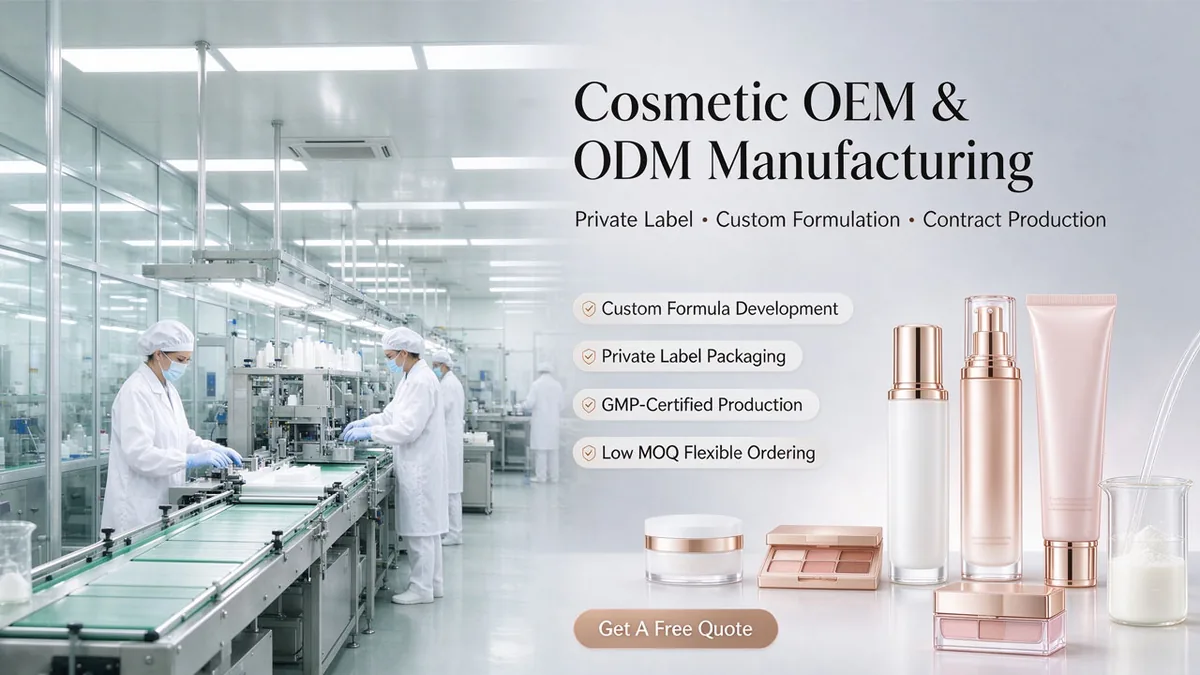
OEM COSMETICS ODM works with packaging suppliers on stock components, modifications to existing tooling and fully custom moulds, and provides tooling cost, lead time and minimum quantity estimates alongside the formula quotation so the decision can be made on total cost. Send us your volume forecast and target retail price and we will tell you which route pays back.
Talk to our team: WhatsApp +86 18709713948 · Email adon@oemcosmeticsodm.com · Website www.oemcosmeticsodm.com