
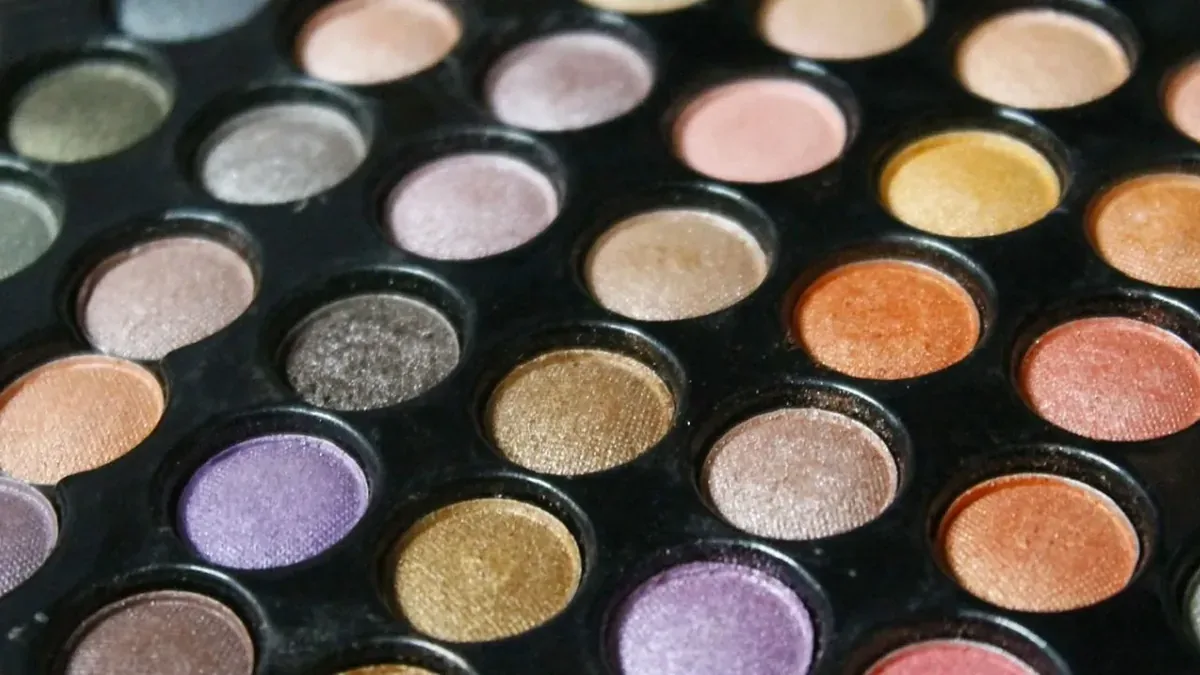
Colour Matching and Shade Standards in Colour Cosmetics
Colour is the attribute a consumer assesses first and judges most harshly. In a lipstick or a foundation the shade is the product; in a tinted moisturiser or a tinted sunscreen it is the reason for the purchase. And colour is also the attribute most easily lost between the approved sample and the production run, because it depends on pigment dispersion, substrate, lighting and the judgment of whoever is comparing.
What a Shade Standard Actually Is
A shade is not a description. It is a physical artefact and a set of numbers. The artefact is a pressed or filled sample of the approved shade, stored protected from light and retained as the master standard. The numbers are measurements taken on an instrument under defined conditions, which allow an objective comparison on any future batch.
Three things make a standard usable. It must be the same physical form as the product, because a powder and a pressed compact of the same pigment read differently. It must be stored so it does not fade, because a faded master standard quietly redefines the shade. And it must be replaceable, with a documented procedure for producing a new master that matches the old one before the old one degrades.
Why Visual Matching Fails
Visual matching is affected by the light source, the observer, fatigue and the surrounding colours. Two people in the same room will disagree on a borderline match, and the same person will disagree with themselves across a working day. Metamerism makes it worse: two samples that match under one light source can diverge under another, which is exactly what happens when a product is approved under office lighting and rejected under daylight at a counter.
Visual comparison is still useful, but only under controlled conditions: a standardised light booth with defined sources, a defined viewing geometry and a trained observer. It is a check, not a specification.
Measurement
A spectrophotometer converts colour into numbers, usually in a colour space such as CIE L*a*b*, and a colour difference formula produces a single figure for the distance between a sample and the standard. The value of this is that a batch can be accepted or rejected against a stated tolerance rather than against someone's opinion on the day.
- Sample preparation matters more than the instrument. Powder must be pressed at a defined pressure, creams must be applied at a defined thickness, and the substrate must be standardised. Inconsistent preparation produces inconsistent numbers.
- Tolerances should be set by product. A foundation shade tolerates less variation than a nail lacquer, and a tinted balm less than either.
- The instrument needs calibration. A white and black tile calibration, performed on a schedule, is the minimum. An uncalibrated instrument produces confident nonsense.
Where Colour Is Lost in Manufacturing
Several stages can shift a shade, and each has a control.
- Pigment dispersion. Undispersed pigment reads lighter and grainier. Dispersion is a process with a defined endpoint, usually a fineness of grind, not a duration.
- Order of addition and mixing. Pigment added to a partially complete blend distributes differently than pigment dispersed into a portion first.
- Temperature. In products containing waxes, the temperature at which pigment is incorporated affects the final appearance.
- Substrate and pack. The same product looks different in a clear jar and an opaque one, and different again against a coloured carton.
- Segregation in the bulk. Powders in particular settle, so the shade at the top and bottom of a vessel differs.
Batch Control in Practice
A colour control procedure defines where samples are taken, how they are prepared, which instrument and settings are used, which standard they are compared against and what tolerance applies. Samples should be taken at the start, middle and end of the fill run, because a shade that drifts across a batch is a real and common failure. Retained samples of each batch are kept so that a future complaint about colour can be investigated against a physical record rather than a memory.
Approving a New Shade
Shade development is iterative, and the useful discipline is to approve against the same criteria that will be used for batch control. A shade approved by eye under office lighting will be difficult to reproduce. A shade approved with a measurement and a physical standard, in the final pack, under the lighting conditions it will be sold in, is reproducible. Brands developing a shade range should expect several rounds, and should ask for measured values with each round so the direction of change is unambiguous.
What to Ask a Manufacturer
Do you measure colour, on what instrument, with what tolerance? How are master standards stored and renewed? Are samples taken across the batch or only at the start? Can I see a batch colour record? A plant producing colour cosmetics under ISO 22716 and GMP systems will have written answers to all four. OEM COSMETICS ODM measures shade on calibrated instruments against retained master standards, samples across the fill run, and supplies colour data with the batch record for every colour cosmetics order.
Talk to our team: WhatsApp +86 18709713948 · Email adon@oemcosmeticsodm.com · Website www.oemcosmeticsodm.com